Hidden Depths: The Subterranean Secrets of Quetzalcoatl’s Temple
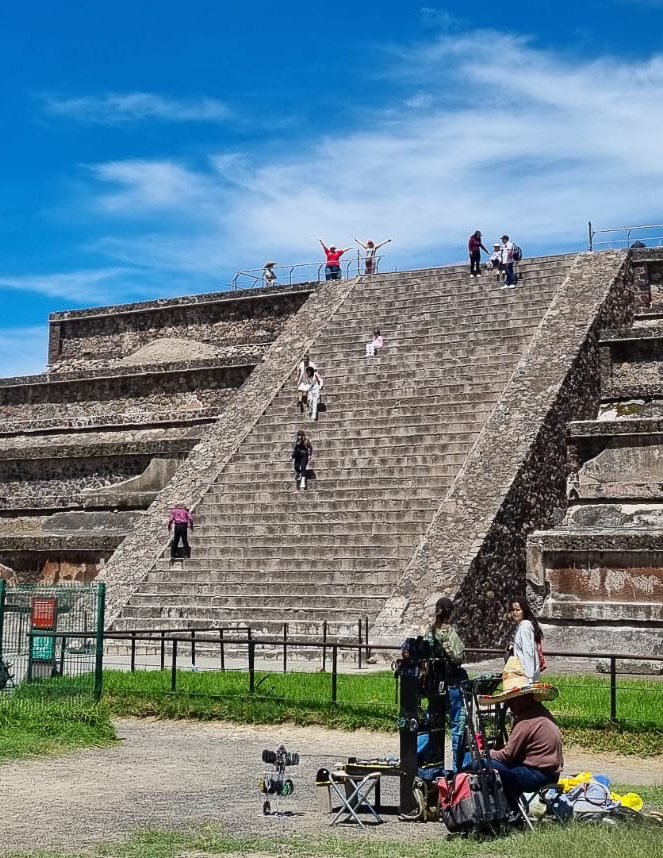
Teotihuacan, Mexico, is one of the greatest mysteries that many do not even know of. Recent archeological discoveries have shifted the historical narrative completely. Quetzalcoatl, the feathered serpent god, is such an important icon that he has revealed massive hidden tunnels underneath the pyramids and the Quetzalcoatl temple. Uncovered in 2003 after heavy rains, a 15-meter underground tunnel system that connected the main point of the city over 100 meters in front of the temple was found. This tunnel system is believed to be the physical representation of their idea of the “underworld,” filled with thousands of sacred objects and offerings to keep the great feathered serpent god happy.
A Microcosm
What was thought to be an underground tunnel system for war or even water was far from what it was actually for. It is a highly engineered map of the cosmos. Teams of researchers from the INAH (National Institute of Anthropology and History) discovered that all the walls and ceiling were dusted with pyrite (fool’s gold) and hematite. (De Antropología e Historia, n.d.) Once a small light hit the tunnels back then, these minerals would sparkle, mimicking the night sky and the stars in the underworld.
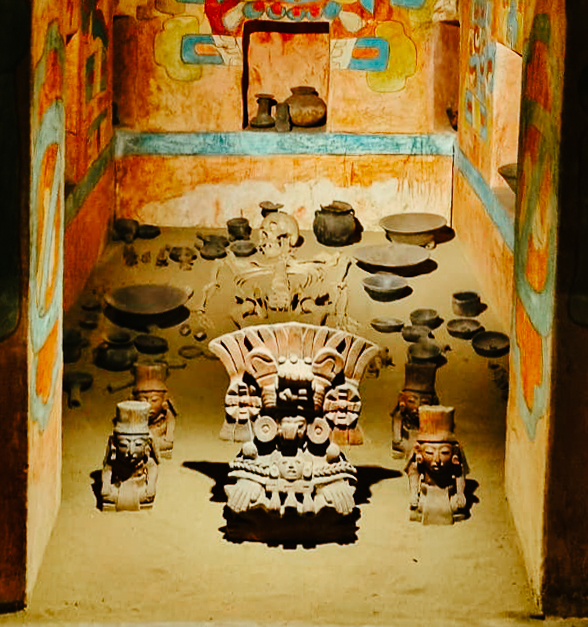
If you just thought that was very impressive, wait. At the very end of the tunnel, archaeologists found a miniature landscape consisting of
- Greenstone Statues: Figures that are likely representing the founders of the city. They are all facing the intersection of the world’s axes.
- Seashells and Rubber: Items linked to fertility, the power of Tlaloc (god of rain, fertility, and the land), and items linked to fertility.
- Liquid Mercury: It was used to represent subterranean rivers and lakes. (Laity, 2022)
The Power of Mercury and Wealth
The fact that there was liquid mercury down in the tunnels is particularly significant because mercury is very difficult to extract and process. The presence suggested a high level of chemical knowledge with a fast trade network. According to Chavez, the lead archaeologist mentioned that mercury was most likely symbolizing a representation of the underworld’s waters (Laity, 2022). After finding this particular part of the tunnel, it actually reinforced that Quetzalcoatl’s role wasn’t just the god of the sky, but it was a spiritual identity that navigated the watery depths of the afterlife.
Strategic Symbolism
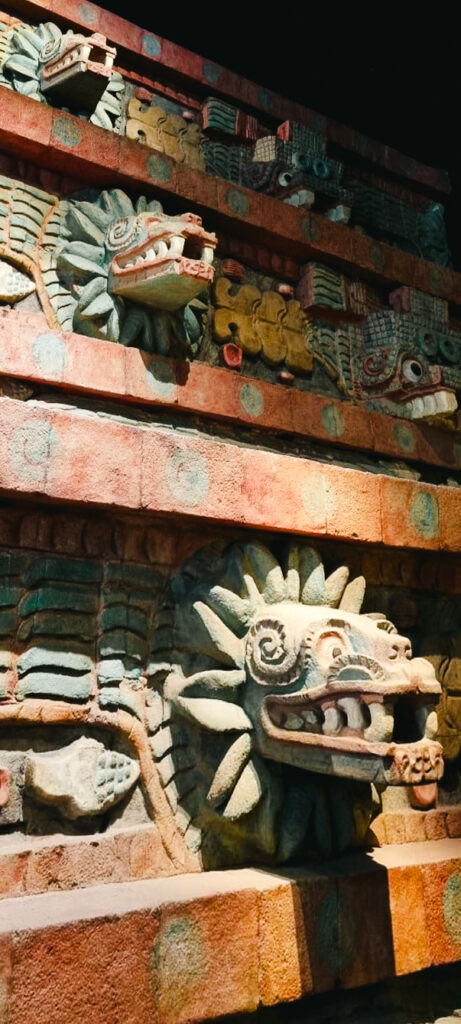
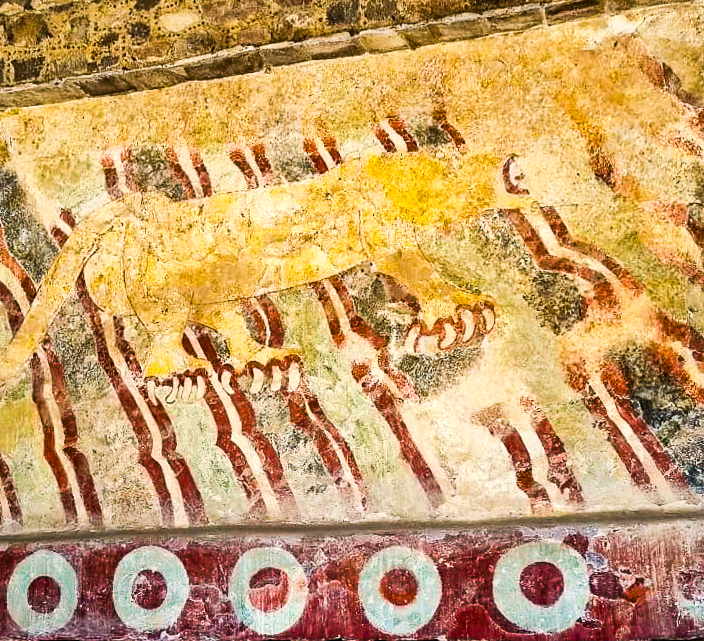
The feathered serpent god Quetzalcoatl acted as a unifying icon for a city that lacked a single identity, your bowl, great king, in its art. There was no leader in any of the drawings; there were only multiple gods painted in the murals, and they were painted the most. Unlike the Mayan culture, which carved portraits of very specific rulers, they only focused on the priesthood and the divinity of this god, Quetzalcoatl. By placing their offering underground, they were effectively hunting the seeds of their city’s prosperity in the very spiritual soil of the Earth.
Continuing the Research
Teotihuacan has been the nest of mystery for the longest time, and the exploration of the tunnels is still providing data today. Certain parts of Teotihuacan have been temporarily closed due to new tunnel discoveries. High-tech tools like ground-penetrating radar have been used to locate chambers that might contain the remains of Mesoamerican rulers, and such a discovery would rewrite the history of Mesoamerican governance. Teotihuacan has been the most popular place for local tourists, and every Mexican knows the story and the mystery by heart.
References
De Antropología E Historia, I. N. (n.d.). Teotihuacán. Lugares INAH. https://lugares.inah.gob.mx/en/node/4528
Jarman, M. S. P. B. J. (2016, May 11). A secret tunnel found in Mexico may finally solve the mysteries of Teotihuacán. Smithsonian Magazine. https://www.smithsonianmag.com/history/discovery-secret-tunnel-mexico-solve-mysteries-teotihuacan-180959070/#:~:text=In%20the%20fall%20of%202003,Serpent%2C%20in%20Teotihuac%C3%A1n’s%20southeast%20quadrant.
Laity, P. (2022, October 19). Lakes of mercury and human sacrifices – after 1,800 years, Teotihuacan reveals its treasures. The Guardian. https://www.theguardian.com/artanddesign/2017/sep/24/teotihuacan-pyramids-treasures-secret-de-young-museum-san-francisco#:~:text=8%20years%20old-,Lakes%20of%20mercury%20and%20human%20sacrifices%20%E2%80%93%20after%201%2C800%20years%2C%20Teotihuacan,under%20a%20galaxy%20of%20stars.
Museo Nacional de Antropología | Colecciones. (n.d.). https://mna.inah.gob.mx/salas.php?sala=4